Provide executives and purchasing teams real-time insights into which construction materials are purchased the most and where the potential savings are.
Field Materials AI tracks building material prices throughout the year and recommends materials that would result in the highest potential savings based on your purchase volume and historical price volatility.
Turn construction material costs into a competitive edge
Most ERPs don’t support an easy way to track building material prices by supplier, project, cost code, cost type, etc. This is a lost opportunity to save costs and increase your margins. Software like Field Materials AI tracks building material prices throughout the year and recommends materials that would yield the highest potential savings based on your purchase volume and construction material price volatility over time.
Some of the features to look for in a software that lets you track construction material prices are:
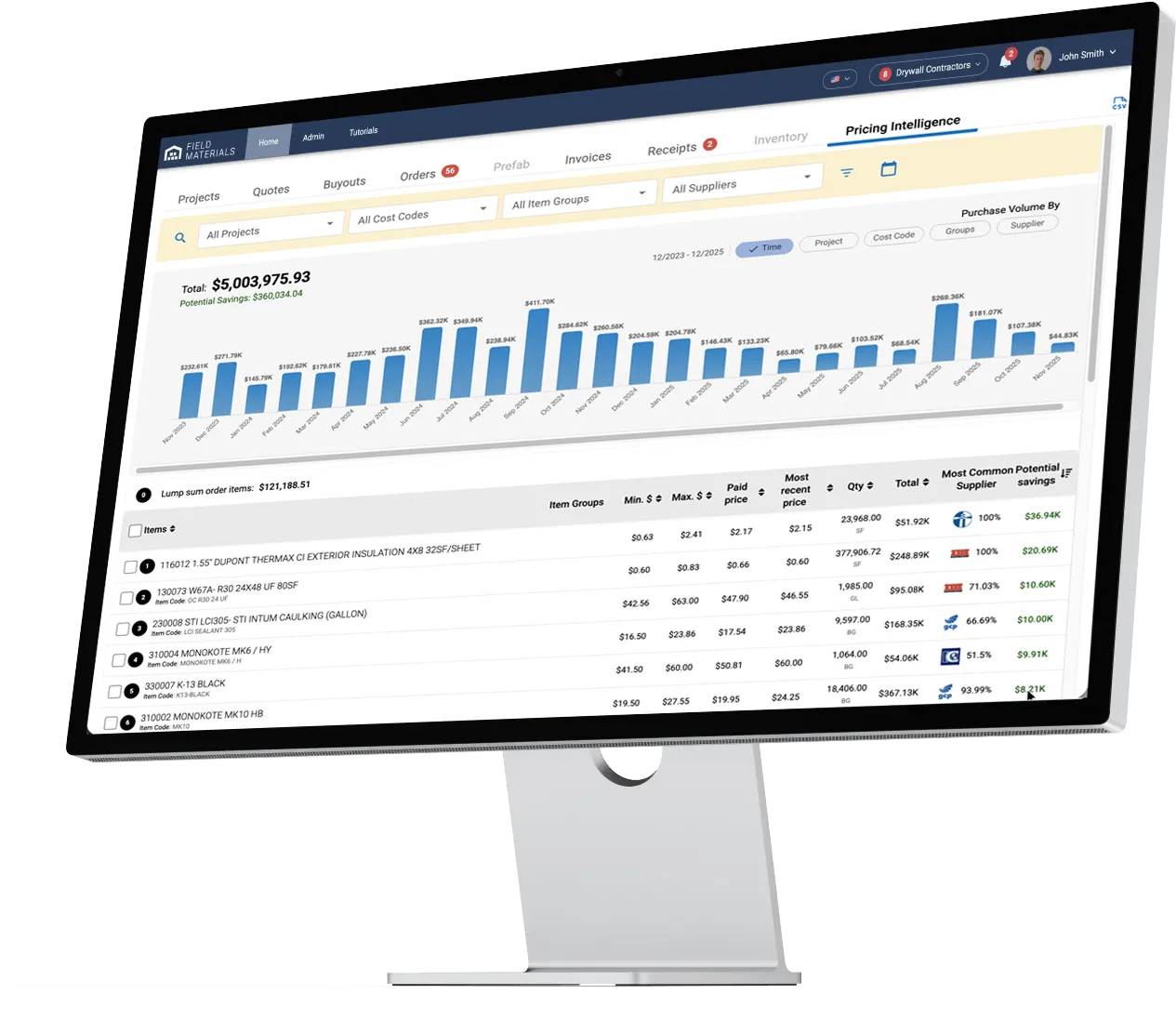
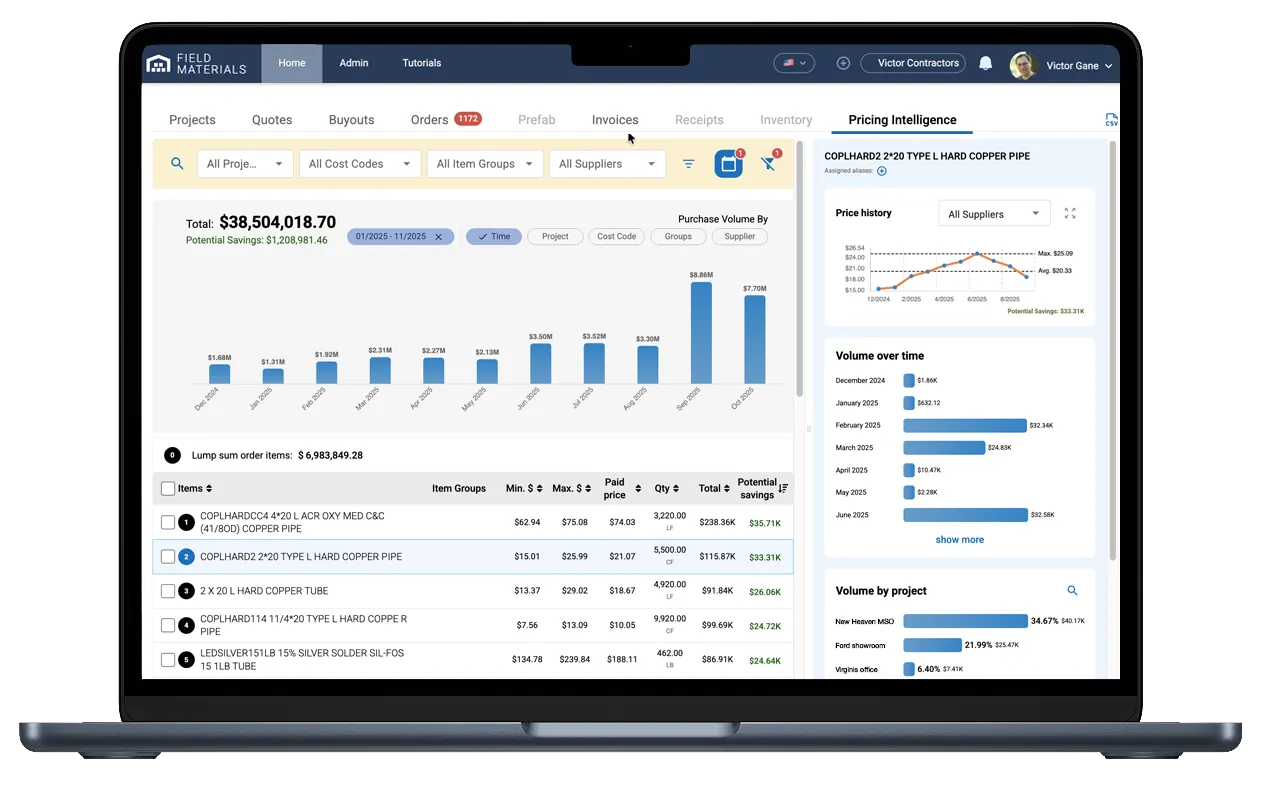
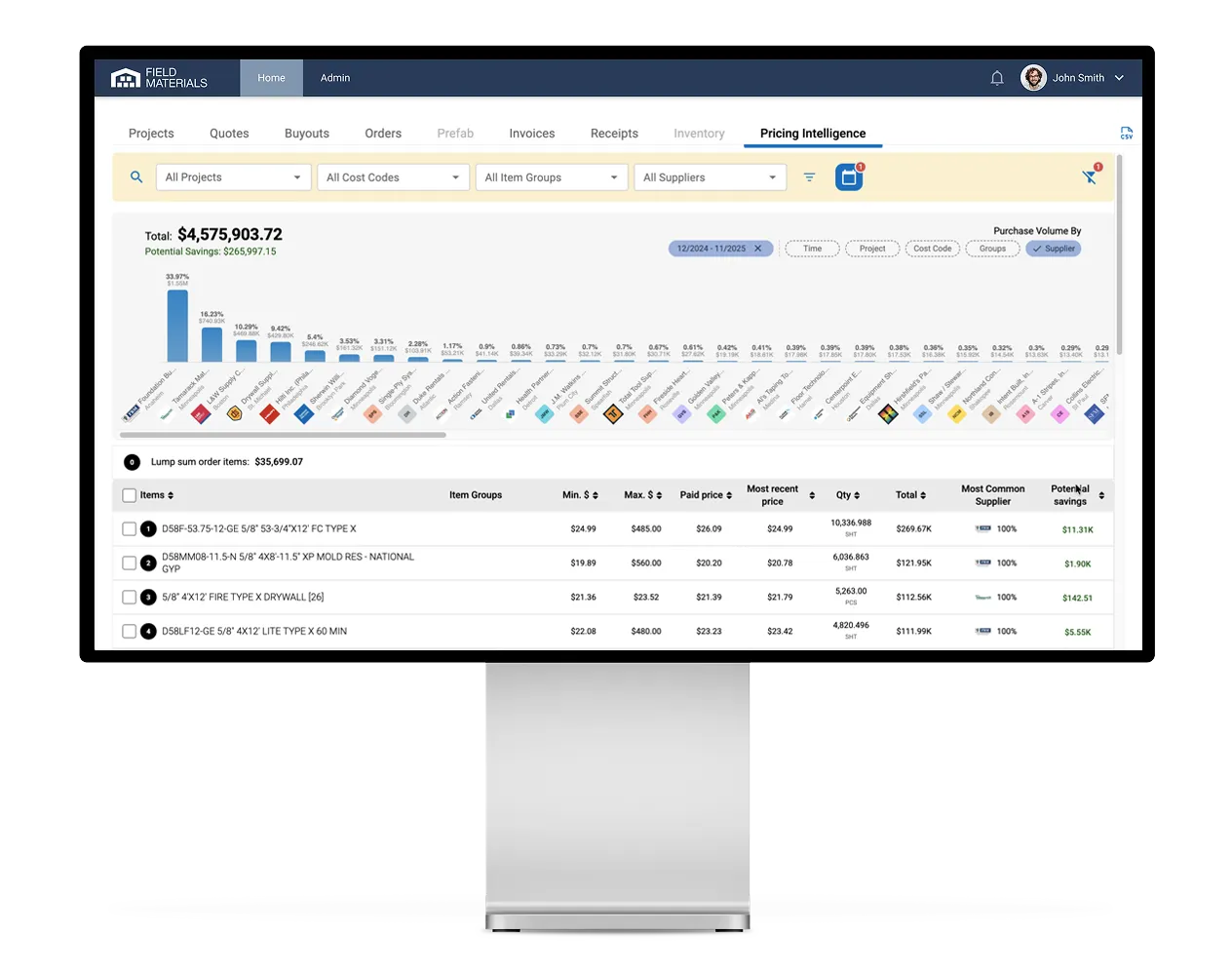
Field Materials AI helps you see which materials you purchase the most and exhibit price volatility throughout the year. Price hikes are often seasonal. By having a clear understanding of when prices for a specific material peak and fall, you can plan ahead and stock such materials at your warehouse when the prices are at their lowest. Field Materials also helps you easily identify from which vendors you bought the most so that you can pursue volume pricing. Finally, you can take a BOM for a new job and see which materials tend to be volatile in price and set up buyouts with vendors for these materials.
The reporting gives you visibility that most construction companies have never had before. You can see spending by project, vendor, cost code, even material/equipment, or time period. The job costs report shows what's been ordered, delivered, invoiced, and paid for the job at the material and unit level.
Budget versus actuals update in real-time as purchase orders are created and invoices are processed. You can drill down from high-level summaries to individual line items to understand exactly where money is being spent.
You also get detailed pricing intelligence: history of material prices throughout the year and recommendations of materials that would result in the highest potential savings based on your purchase volume and historical price volatility.
Reports can be exported to CSV, Excel, or PDF.